
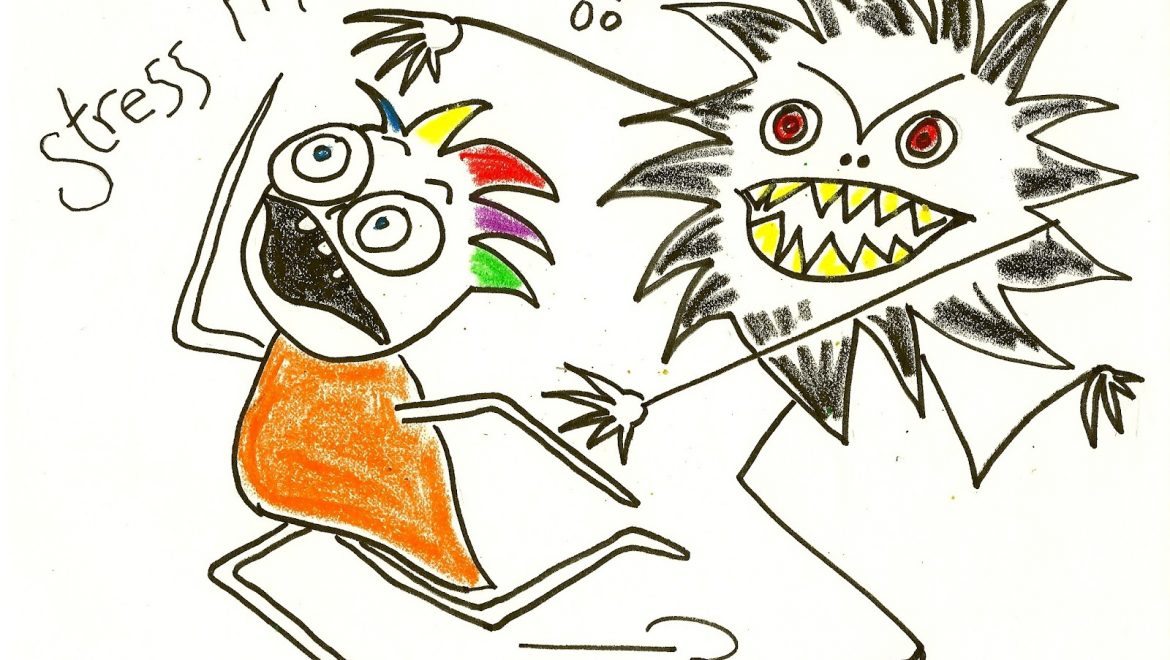
A survey this week by Trade Union UNISON of 2,977 ambulance workers suggested that 96% said they were suffering from stress. This is one of many articles covering the topic of stress and workplace stress, so what is it that causes us to feel like his in the work place? Our long hours culture, staff shortages, irregular or non-existent breaks or lunch hours, working in a target driven industry? When we are busy it is all too easy not to recognise the signs around us – in ourselves and others around us. This article has been written with the intention of being a resource of referral for all employees and managers on how to recognise and control how we ‘Deal with Pressure’. Part 2 will follow later this month with the emphasis on how ‘people managers’ can support their teams.
Dealing with Pressure
|
|
When we find ourselves faced with perceived threat or danger – our bodies react in such a way that gives us a burst of energy and strength as we decide whether we should confront the situation or run away.
Certainly the analogy of a caveman confronted by a wild animal springs to mind and in this instance our reactions would serve us well! But does it have a place in modern life? In some instances yes….it protects and helps us to adapt in times of change or (for example) working towards a tight deadline, it can be motivational and stimulate us to be productive and creative – or in our personal lives when dealing with family emergencies, money worries or relationship challenges.
In our modern world ever challenging and changing environments place more and more demands on us, technological enhancements mean people expect quicker responses…and that we are always available…..
When these events occur with increasing frequency and for longer periods of time this can not only make us feel uncomfortable but in some instances it can be unhealthy, lending itself to the modern-day phenomenon of stress and anxiety.
|

Why is it important to support others dealing with pressure?
| Personal benefits:
|
Business benefits:
|
|
§ Improved morale and engagement
§ Sense of ownership and purpose
§ Reduced feelings of fatigue and strain
§ Pride in work and motivation to produce work of a high quality
§ Recognition and reward for performance§ Fosters a culture of pride as people want to work for your Company |
§ Providing an environment where people can perform and grow § Improved efficiencies and work quality § Improved employee morale and engagement Leading to:- § Reduced absenteeism § Reduced employee turnover
|
What should I be looking out for?
| Uncomfortable Feelings
|
Physical Symptoms
|
|
§ Changes in behaviour § Food cravings § Lack of appetite / ‘comfort’ eating § Emotional / frequent crying § Being more irritable than usual § Over-reacting to criticism § Difficulty sleeping or waking up early § Feeling tired § Difficulty concentrating § Feelings of not being able to cope § Struggling to make decisions where this was once easy § Feeling as thought you don’t know where to start § Not able to think logically or around problems § Feelings that you may say something that others will laugh at § Feelings of worthlessness § Anger § Depression § Anxiety § Feeling guilty if you are relaxing and not always ‘on the go’ § Drinking and smoking more than usual
|
§ Chest pains § Digestion problems (constipation/diarrhoea) § Suffering from indigestion § Cramps or muscular aches § Finding ‘tense’ sensations in your body (particularly the neck) § Dizziness § Fainting spells § Nail biting or increased compulsive activities § Nervous twitches § Pins and needles § Feeling restless § Sweating more § Breathlessness Source: NHS
|
What can we do to help ourselves?
- Encourage and nurture your supportive relationships, whether with work colleagues, friends or family.
- Have clear boundaries between your work and home-life – do you give yourself time to unwind with your partner, children and family and friends. Such as making time to regularly eat meals together.
- Actively engage in activities that provide you with ‘down time’ or time to relax – these could bephysical or intellectual activities, on your own or in a group – or perhaps giving your time to something you value i.e. a charity.
- Look
- after your health and well-being.
- Take regular short breaks – your brain needs lots of oxygen to perform well – just standing up releases an extra 20%!
- Think about how you can improve your time management – seek guidance and support if needed.
If you feel under pressure – stop and think:-
- Have I been here before? What did I do?
- Take time out – to reflect – get a drink?
- Is there
- someone else that could help me with this?
Think about how you communicate:-
- Is that email really necessary?
- Would it be easier (and possibly a more positive experience) to pick up the telephone or speak to them face-to-face?
Feedback from our 2 part Absence Management articles in our February and April editions of our Newsletter led to the topic of this BLOG look out later this month for Part 2 where the focus will be on how ‘people managers’ can support their teams.
Call us today if you would like to discuss this topic in more detail.
